015 What to Do on Bad Days…

When working towards a health goal it’s exciting when you fit into a size smaller or you’re able to do more push-ups than before…but what about the in-between times? How does one stay motivated?

Author James Clear once asked an accomplished trainer who had worked with Olympians the same question. The man responded, “At some point it comes down to who can handle the boredom of training every day, doing the same lifts over and over and over.”

Clear concludes, “this coach was saying that really successful people feel the same lack of motivation as everyone else. The difference is that they still find a way to show up despite their feelings of boredom… no habit will stay interesting forever. At some point, everyone faces the same challenge on the journey of self-improvement: you have to fall in love with boredom.”

Michael Phelps did that. He learned it from his coach, Bob. Once, in between Olympics, Michael broke his arm. Since he couldn’t swim or lift weights, to keep his fitness up while his arm was healing Bob relegated him to a boring stationary bike. (I’m not hating on those who love riding stationary bikes, these are Michael‘s words. And keep in mind this was before Peloton.) He hated that thing but he completed the workouts. Later, when he was able to get back in the pool, he picked up where he left off, qualified for the Olympics, and won more gold medals. Bob often shared a theme from motivational speaker Earl Nightingale. As Michael remembers it, “the one thing that’s common to all successful people: they make a habit of doing things that unsuccessful people don’t like to to do.”

So keep your streak alive whether you feel like it or not. It’s one of the hardest things to do yet just as it was worth it for Michael it will be worth it for you too.

To keep my streaks going I’ve used a free simple Habit Tracker tool from James Clear. Try it or create one like it for yourself on Excel or Google Docs.

After you write in your habits in the left column, put an X in the box corresponding to the day you completed your habit. Do it right after completing a habit and you’ll be surprised at the feeling of satisfaction. As you see your streak grow it will provide additional motivation to stay on track.

If/when your streak ends (because all streaks do at some point) —don’t beat yourself up. Begin a new streak. You can’t change the past but you can start again today. Take a healthy dose of self-compassion and get back on your horse. You can do it.

1. Learn more about the Habit Tracker at https://jamesclear.com/habit-tracker

014 Start Small, Go Big

You want to do big things, great things. And why not?! Other people do it, other people have done it, why not you? You can. You will. But start small.

It his book Atomic Habits, James Clear writes one of the keys to a consistent effective habit is to “make it easy.”

Since starting to read this book about a month ago I’ve experimented.

Small for me then was a 5 minute calisthenics/stretching workout (doing four exercises and one stretch, each activity for one minute). [You may be thinking, “Ha, that’s nothing! What a wimp!” Or, “Oh that’s so hard I wouldn’t last for 60 seconds of push-ups…”. If you thought this you’re missing the point. The point is to start small, whatever that is for you, 1/2 a push-up or 100, one jumping jack or 200. Now back to the story].

I started by completing one 5-minute workout once a week. Now I’m up to four workouts a week. I didn’t push too hard. I didn’t beat myself up when I missed. Psychologically, I even told myself, “I don’t have to do this. I can if I choose to.”

With this approach I felt empowered. I felt like I could choose and it gave me motivation to do it.

I noticed this morning my body is stronger compared to when I started. Before, at the end of a minute of an exercise I would be tired but this morning I found I could do alternating arm and leg raises from a kneeling position (https://youtu.be/uofd3HJWrWg) for TWO minutes instead of one without great difficulty. Such is the power of starting small. Had I started with a 20 minute workout 4 times a week I could have completed it but it would have been so hard and uncomfortable at first that I wouldn’t have repeated it or it would’ve been scattered and inconsistent.

Clear calls the optimal difficulty level for a habit the “Goldilocks Rule”—the point where the habit is not too easy, not too hard, it’s just the right amount of difficulty and challenge. A habit started at this level is on track to stick.

Pro Tip:

As you and I begin this New Year, start small to go big.

013 [Food] Transmogrification (Thanks Calvin)

Change the Food’s Form—Slice it, Modify it, Blend it, Squeeze it

Slice the Apple

Not long ago I had a discussion with my dad about nutrition. He shared that he liked apples but didn’t eat them unless they were cut up. He’s not one to rip into an apple without it first being sliced.

Remove the Crust

My 9 year old daughter Coco doesn’t like bread crust. I don’t like waste. She gives me her whole-wheat toast crust and we’re both eating nutritiously. Last I checked, the inner whole-grain bread is just as nutritious as the crust so as her dad seeking to help her form healthy food habits it’s a win-win.

Blend It

My wife Jules rarely peels a banana and eats it. In fact I can’t remember a single instance of her doing it in our 11 years of marriage. But Jules loves smoothies with bananas in them!

Try it Squeezed

I have never liked olives. As a kid my sister Erin would put a black olive on each of her fingers and in turn pop each into her mouth with delight. Not me. About once every year or two I try black or green olives on a pizza or in a Greek salad… I still don’t like them. I don’t know if I ever will.

However, I DO enjoy olive OIL. Extra virgin olive oil not only adds a rich, savory flavor to pan-fried veggies and meats, but it also contains mono- and polyunsaturated fats, the top two very best kind of fats.

What different food forms do you like?

Email me at YouThriveToday@gmail.com

012 Super-fridge, Revisited

This week I experimented with BJ Fogg’s “Super-fridge” idea. (Fogg authored the book Tiny Habits; “super-fridge” refers to once a week shopping, preparing, and stocking one’s fridge full of nutritious and delicious foods. One may eat as much as he/she wishes but only from the fridge.)

This concept, tried in a small way, may significantly impact your life as it has mine this week.

If you’re like me, I know eating fruits and vegetables, especially vegetables are good for health but I don’t always eat them. Often I buy them and they rot in the crisper. So last week when grocery shopping I placed a bag of carrots, a stock of celery, and a cucumber in my basket and felt good about myself. Normal. But just buying the vegetables, transporting the vegetables, and storing the vegetables did not produce health—I needed to eat them! [choir sings].

This week I tried out Foggs’ Super-Fridge idea (in a miniature way), on Sunday cutting up celery, a cucumber, and dropping in pre-cut baby carrots… Seeing these vegetables and being able to reach for them the same as I would a bag of chips made this habit easy to increase vegetable consumption.

Make it easy to eat intentionally.

Merry Christmas!

011 Not If, But When

The question is not if such a crisis will occur but when

Andrew Weil, M.D. writes, “ I think most bodies come with warranties for 80 years of productive, relatively trouble-free service, if basic requirements for preventative maintenance are followed…What I think happens around age 40, however, it’s not that the warranty runs out but that the bill comes due… I believe many disasters could be averted, because they are diseases of lifestyle, products of years of failing to eat wisely, exercise appropriately, or treat body and mind in ways that protect the healing system… The question is not if such a crisis will occur but when(Eight Weeks To Optimum Health, 18-19.)

To promote a happier, healthier, longer life, I raise my voice for intentional living, and especially eating—an activity most Americans do three or more times a day.

010 When you feel full, say it out loud—“I am full.”

At a work lunch two days ago a woman in my group filled her plate with Thanksgiving meal—turkey, ham, potatoes, etc.—enjoyed it, ate not fast/ not slowly, then at a point pronounced, “I am full.”

Even though she still had food on her plate (and there was plenty more at the serving table) she had reached her satiety point, recognized it, and said it out loud.

Audibly recognizing satiety—saying, “I am satisfied,” or “”I’ve had enough,”—can be the tipping point to form the habit of eating the right amount.

Have you noticed someone say this or used this tool yourself?

Try it today and see how it can help you.

009 Where will it lead?

“Decisions determine destiny” -Thomas S. Monson

Dallin Oaks, a former university president, state Supreme Court Justice, now global church leader taught, “We make countless choices in life, some large and some seemingly small. Looking back, we can see what a great difference some of our choices made in our lives. We make better choices/decisions if we look at the alternatives and ponder where they will lead.”

The same is true with eating—an activity we do one (for you intermittent fasters out there), three, or more times a day.

If I eat this every day for the next 50 years what would it do to my body?

If you’re OK with the result then that’s a good indication you’re eating intentionally. If not, you may need to adjust the frequency with which you eat said food item.

Another way to look at it is picture your 70 year-old body. No really. What does it look like? What preventable chronic diseases do you have or don’t have? Then, make the effort to learn, create, and follow a plan so the body and health you imagine becomes your reality when you get there. And beyond.

Will there be unforeseen health challenges? Does it always go according to plan? Of course not. Without a plan though you’re assured mediocre results at best. As the saying goes, “if you fail to plan you plan to fail.”

You’re not mediocre. That’s not for you. So make a plan.

#eatintentionally

008 Where Do Bread and Other Carbohydrates Fit In? Do this.

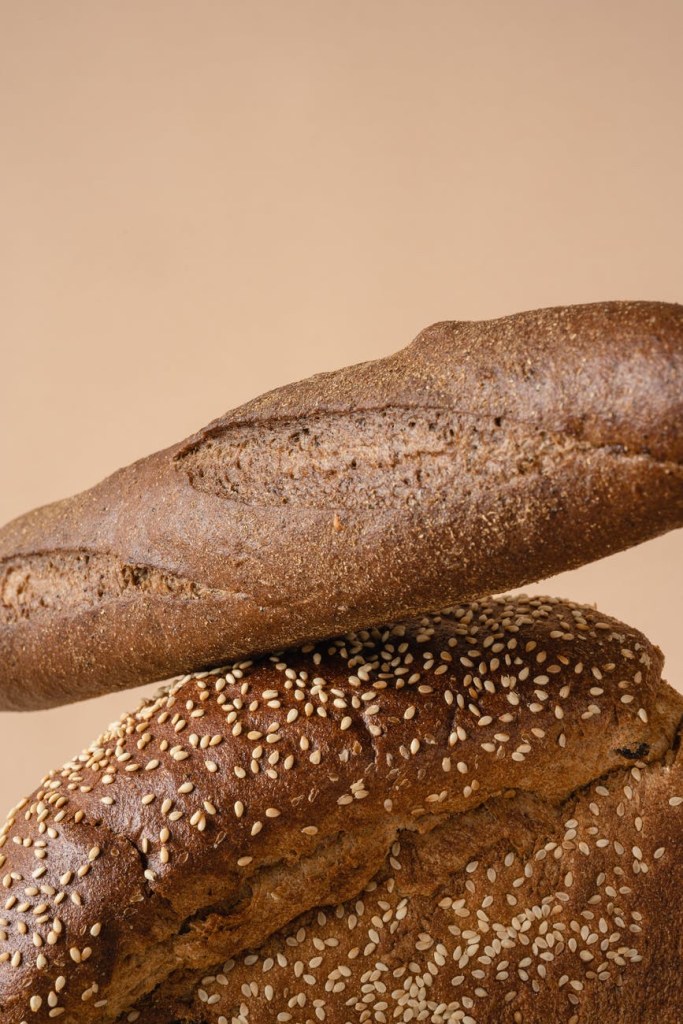
Choose whole-grains that are “good” sources of fiber at least 50% of the time.

How do you choose your bread? Pasta? Cereal? Rice?

The Whole Grains Council purports, “Studies show that eating whole grains instead of refined grains lowers the risk of many chronic diseases. While benefits are greatest with at least 3 servings daily, some studies show reduced risks from as little as one serving daily. The message: every whole-grain in your diet helps!”1

Look at the Nutrition Facts Label and the Ingredients List

The Whole Grains Council recommends eating foods which are “good” sources of fiber (2 grams (g) of fiber per serving). Check the fiber content on the Nutrition Facts label.

Often, just below you’ll find the Ingredients list. A food’s ingredients are listed in order of amount present in the food, most to least. Buy breads, pasta, cereal, and rice listing “whole-grain,” “whole wheat,” “whole oats,” “whole…” (you get the idea) as the first ingredient.

Why? It’s healthier. Whole-grains contain not only the germ (as “enriched” grains do) but also the bran (think fiber) and endosperm (carbohydrates, proteins, and some B vitamins).

Eat Food In Its most Natural State

Ezra Taft Benson, former Secretary of Agriculture, remarked, “In general, the more food we eat in its natural state – without additives – and the less it is refined, the healthier it will be for us. Food can affect the mind, and deficiencies of certain elements in the body can promote mental depression.”2

Pro Tips:

1. For at least HALF of the grains you eat verify on the Nutrition Facts label there are 2 grams or more of fiber per serving.

2. Select bread, pasta, rice, oats, etc. which list “whole-grain” as the first ingredient.

It’s gonna be good for your body, including your gut health.

References

1. Health Studies & Health Benefits. (2022, July 29). Whole Grains 101. https://wholegrainscouncil.org/whole-grains-101/health-studies-health-benefits/what-are-health-benefits

2. Ezra Taft Benson Quotes. (2022, July 29). Brainy Quotes. https://www.brainyquote.com/quotes/ezra_taft_benson_556125

007 What’s In Your Fridge?

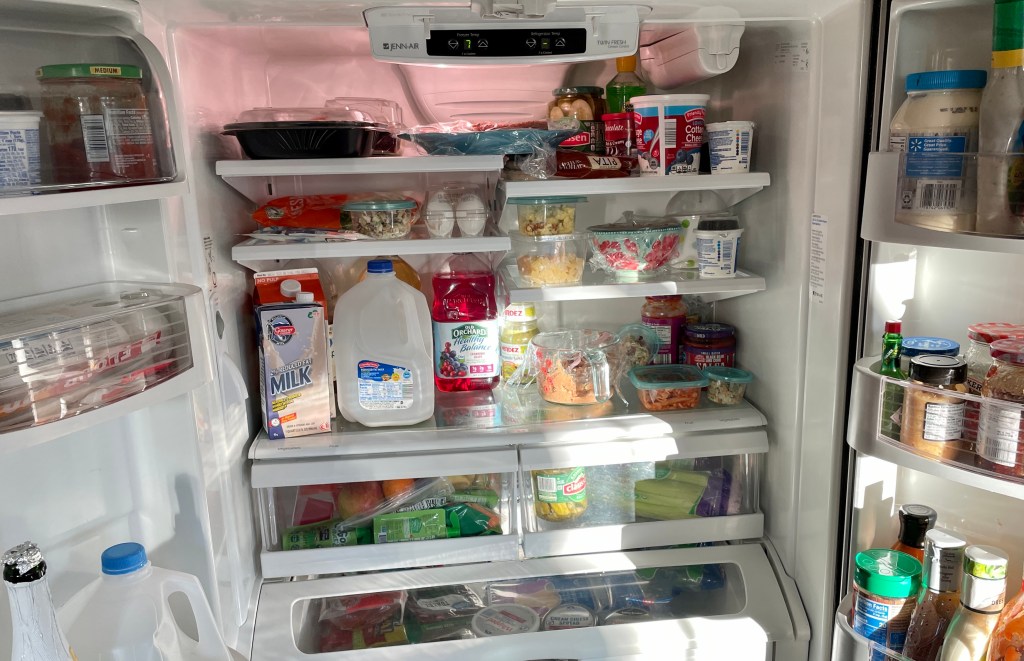
BJ Fogg, author of Tiny Habits, shares that when doing the weekly grocery shopping he and his partner create a “super fridge” every week.

The rule is they can eat as much and as frequently as they wish from the food in the fridge. It works because the fridge is only full of nutritious foods they like. They do not feel deprived; they feel satisfied.

It’s also hard to overeat on whole foods like carrots, apples, celery, grapes, whole wheat toast, etc. because these foods are so filling.

006 Eat more apples—without breaking a sweat

James Clear, author of Atomic Habits, tells the story of learning to eat apples. He noticed he would buy apples and put them in his fridge’s crisper then forget about them. By the time he reached for one the lot had spoiled.

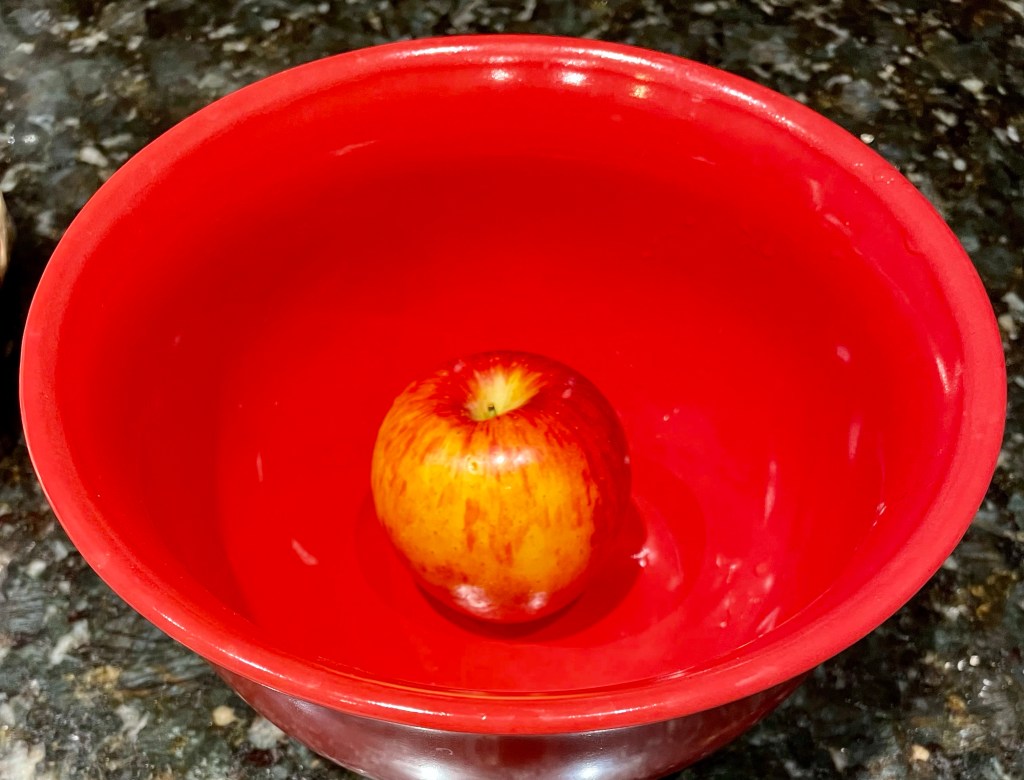
So…next time he placed the apples in a large fruit bowl in a conspicuous area. This simple change caused him to eat apples frequently.

Clear continues, “People often choose products not because of what they are, but because of where they are… The most powerful of all human sensory abilities…is vision…[I]t should come as no surprise that visual cues are the greatest catalyst of our behavior. For this reason, a small change in what you see can lead to a big shift in what you do.”1

Similarly, if your pantry and fridge are filled mostly with whole grains, fruits, and vegetables, you’ll reach for them because that’s what you see—and your life will change.

Pro Tip:

Make apples (or one food you want or need to eat more of) visible and easily accessible.

You can do it.

1. 84.