Regarding eating, New York Times Best Selling Christian author Lysa Terkeurst writes, “Eve craved what she focused on . . . [and] [w]e crave what we eat. If I make healthy choices over a period of time it seems to reprogram my taste buds. The more veggies and fruit I eat, the more veggies and fruit I crave. However, if I eat brownies and chips, I crave brownies and chips in the worst kind of way.”1
My wife eats less salt and prefers “low sodium” foods. Foods she buys and prepares are this way. My tastebuds have adapted so now when I eat salt I notice!
Pro Tip:
If you don’t like something about your diet, if you feel controlled by cravings, replace the foods you crave with healthier foods you like. Do it consistently and you’ll be pleasantly amazed how your cravings change.
Do you like to eat out? Do you and your significant other have a favorite restaurant you haunt?
When Jules and I married, people were generous with gift cards to local restaurants. We learned early on many American food chains serve calorie-dense large portions so when we went out to eat we started splitting an entree and a dessert. We still do.
You might think, “I want the whole thing. What if I’m still hungry after eating just half?”
Don’t be hungry. You Thriving is not about deprivation. It’s about intentional, informed, happy living. In this case remember the levels of hunger (https://youthrivenet.wordpress.com/2022/03/31/029-3-levels-of-hungry-3-levels-of-full/). Listen and respond to levels of hunger early. Often before we eat out I’ll snack on trail mix or drink a meal replacement shake while driving home. Jules might eat a string cheese and an apple. This keeps hunger at bay, adds nutrients to the likely less nutritious meal we’re about to split, and promotes satiety overall.
New habit to try: Split an entree and a dessert.
We feel better after the meal and we spend less money too! It’s easier on the waistline and on the bank account.
The other night Jules, my kids, and I watched a YouTuber bake a dessert. What started as a cookie became a chocolate-crusted-Oreo-cheesecake-whipped-cream-topped sprinkled pie. Layer upon layer, we laughed hysterically as the chef added each new stand-alone dessert to her culinary creation.
More and more the limits get pushed on what’s OK. It takes more and more sugar, salt, and fat to sensationalize and tantalize the taste buds. When is enough enough? Who will blow the whistle on what’s too much?
Producers don’t care what it does to your body. It doesn’t affect them. They take no responsibility for what happens to you or your health so who will?
The answer is you. And me. Each person must decide for himself or herself.
Is it criminal to eat a dessert like the one described above? Of course not. Just know what you’re eating, how much is good for you, and do it intentionally, eyes wide open. If a dessert like this was served at a party, I probably would do one of three things: eat a bite, eat a thin piece, or split a piece with my wife paying attention to the sweetness, how it made me feel and adjust accordingly. 
How do you feel about desserts? When was the last time you had a dessert that you truly enjoyed —while you were eating it and 20 minutes later (no regrets)?
Sukumar, a successful IT expert at a tech company, realized suddenly at age twenty-six he was still single and getting fat. He wanted to change and tried eating less and exercising more for years without seeing lasting results.
“Sukumar had begun to experience back and neck pain so bad that he had trouble sitting at his desk for more than 30 minutes… his doctor pointed to the extra weight Sukumar was carrying around his midsection. That, he said, was part of the problem. Sukumar kept trying to be healthy. Exercise more. Eat less. For years.
“Unfortunately Sukumar was stuck in the all-too-familiar cycle of crash-course diets punctuated by ambitious workouts. He got hungry and sore, but he wasn’t seeing results. Sukumar‘s frustration and physical pain mounted, and he couldn’t seem to gain any traction when he it came to getting fit” (Fogg, BJ. Tiny Habits, 163-164).
How did he do it? Sukumar started with a tiny habit—after brushing his teeth he planked for five seconds and did two push-ups. Now, years later, he does fifty pushups and planks for five minutes!
Being fit also became part of Sukumar‘s identity which reinforced his continued healthy choices and habits.
As a boy one afternoon I toasted nearly an entire loaf of white bread, buttering each slice to perfection and sprinkling with cinnamon sugar. Nearly complete with my culinary creation Dad walked by suggesting I may have exceeded what was good for me.
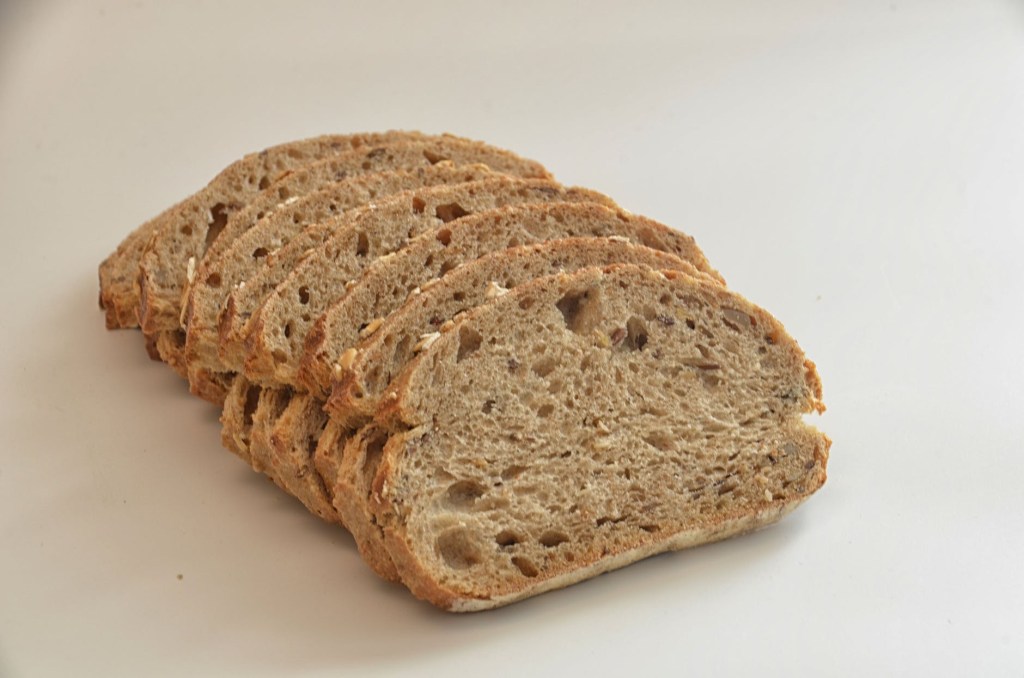
Whole-grain sliced bread
What is whole-grain and why is it preferable to white bread, sometimes called “enriched” grain?
Background
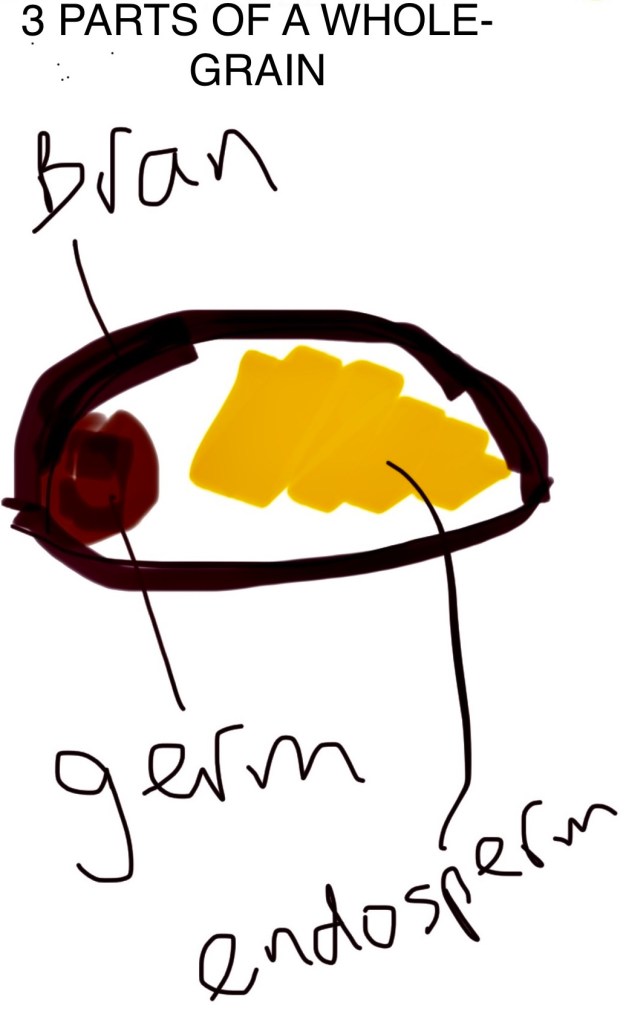
A whole-grain is food from a plant which contains three major components: bran, endosperm, and germ.
BRAN is the outer layer containing anti-oxidants, B Vitamins, and fiber.
GERM is the part of the plant which would become a new plant (if you weren’t already eating it) which contains B Vitamins, proteins, minerals, and healthy fats.
ENDOSPERM is (was) the GERM’s food supply. Now it’s your food supply—containing starchy carbohydrates, proteins, and some vitamins and minerals.
Benefits of Whole-Grain Consumption
According to WebMD, “Whole grains are packed with nutrients including protein, fiber, B vitamins, antioxidants, and trace minerals (iron, zinc, copper, and magnesium). A diet rich in whole grains has been shown to reduce the risk of heart disease, type 2 diabetes, obesity, and some forms of cancer.”1
Further, “Whole-grain diets can also improve bowel health by helping to maintain regular bowel movements and promote growth of healthy bacteria in the colon.”1
“Enriched” Grains
Sounds good for you, right? Wrong. This kind of grain contains only the endosperm, bran and germ having been removed.2 People were malnourished so the U.S. government required confectioners to put vitamins and minerals back in the grain in an effort to replace what was removed.
Bran and germ give bulk and coarseness to bread and other foods made from it so for baking and cooking delicate dishes, consumers went wild for these products because of their smooth, delicate textures and tastes.
Never?
Nope. Enriched, refined grains—used to make donuts, cakes, cookies, pastries, rolls—add pleasure to life and eating. Many family traditions and memories include these culinary delights. These tasty treats are part of a nutritious diet and balanced lifestyle, precisely because they help us achieve just that, balance.
When a person operates from a deprivation mindset, he or she tends to overindulge. He/she may think, “I don’t know when I’ll get to have this food again…” often resulting in overeating.
Try this
USDA recommends making at least half your grains whole-grains.3
It’s easiest to do this in the morning after you’re rested. When you start right it’s easier to stay right. Plus, a lot of breakfast options include whole grains such as whole grain breakfast cereals, hot cereals such as oatmeal, cracked wheat, or whole wheat French toast (see 003 French Toast the Most https://youthrivenet.wordpress.com/2021/10/28/french-toast-the-most/).
When you grocery shop, here are some whole-grain options:
Whole-grain corn
Whole oats/oatmeal
Popcorn
Brown rice
Whole rye
Whole-grain barley
Wild rice
Buckwheat
Triticale
Bulgur (cracked wheat)
Millet
Quinoa
Sorghum
100% whole wheat flour.1
One of the great things about eating is we do it multiple times a day so if we don’t have a ideal meal we can iterate and improve the next one. Build yourself up and give yourself credit each time you do a healthy habit.
Have you ever felt like you didn’t have time to exercise, even just a few minutes? I have. 
World-renowned self-improvement personality Brian Tracy writes, “If your goal is to live a long, healthy, happy life and be fit and trim physically, there is no substitute for regular exercise. Fortunately, you do not have to train for the Olympics or a triathlon to enjoy superb levels of physical well-being. By building exercise and physical training into your daily routine you can achieve physical fitness just by making a few small modifications to your lifestyle.”1
Years ago, juggling family, career, and church responsibilities my dad one day mused, “Clark, I wish I could pay you to exercise for me.” If only Dad.
I am responsible for my health just as you are responsible for yours and unfortunately no one can do it for us. Exercise is also one of those activities that we can’t afford NOT to do— just like we can’t afford to not brush our teeth.
The CDC estimates $117 billion in annual health costs related to low physical activity1. These health costs include among others treatments for heart disease, Type 2 diabetes, and cancer. No thank you if you and I can avoid it, right?
The good news is you and I can minimize or eliminate much of the risk associated with these diseases through our healthy lifestyles.
Exercise is one component.
Pro Tip:
If time is a barrier to exercise for you as it is for me and many others here’s a tip to try—do walking-in-place high knees while *brushing your teeth for 2 minutes in the morning and walking-in-place butt kicks while brushing your teeth for 2 minutes at night. Built-in 4 minutes of leg/core exercises each day. Bam.
*P.S. If you have a Sonicare electric toothbrush from the moment you push Power it runs for two minutes. Easy peasy. You could also set a timer on your phone or watch.
With this habit, you’re on your way to sustained healthy teeth and gums, strong quads, hamstrings, core, and confidence! It’s a great way to start and to end the day being mindful of and grateful for your physical body and health.
Disclaimer: You need good balance here. This activity could result in serious injury so take care. Consult a physician and/or a trusted credentialed professional before starting any physical activity program.
Some experts believe a person acts according to who he or she thinks he she is; people decide according to identity.
Bryan Tracy teaches, “you become what you think about most of the time.”
It follows that if something is misaligned with your identity you will seek realignment. If this is true, than getting a clear picture of what you want—who you want to be—and then making it authentically “you” will help bring about the changes and improvements in your life you (perhaps desperately) seek.
Freshman in college, I was tired of being the skinny kid. I wanted muscle.
Throughout his life my grandpa Bill Tanner Jr (PsychD) taught people to picture in their minds who they wanted to be then to act as if it was already true—over and over again—until it became reality.
So I found, printed, and posted on my dorm wall a picture of a muscular lifeguard guy I wanted to look like. I pictured myself looking like that guy every day that year then went to work lifting weights 2-3 times a week, playing intramural soccer, and running to build endurance.
I became more muscular. Now more than 20 years later, I sill am. I still make daily choices about what to eat and what not to eat. I move, am active, and exercise from this identity. I am a healthy person. I believe this to my core and it shows. I feel zero deprivation. This is no fad diet. My choices are based on what I most want for my life and who I feel I am.
When it comes to her fitness “firm and fit” is what my mom envisions for herself.
I know a family whose last name is Fitt. It may surprise you to learn they are all fit—dad has run a marathon yet is especially good at long-distance road biking, mom is a champion distance runner, and the kids excel at track and field. I believe their last name invites them to pattern their lives to be healthy. It’s part of their identity. Fitts are fit.
Start today to believe you are a healthy person. Ask yourself, “What would a healthy person do?” Today, right now, begin to make being a healthy person part of who you are—part of your identity.
Hunger is one of the body’s survival instincts. The hypothalamus (1) in the brain sends hunger and satiety signals. When not initially responded to it communicates stronger messages sending hunger pains more intensely to the stomach. If continued non-responsiveness occurs hunger pains escalate. When responded to early and consistently you achieve, as Benjamin Franklin learned at a young age, “greater Clearness of Head and quicker Apprehension which usually attend Temperance in Eating and Drinking.”(2)
While levels of hunger and satiety vary, for our discussion we will consider just three–3 Levels of Hunger and 3 Levels of Satiety. Consider how you relate.
Hunger
Level 1: first sensation for desire for food.
Level 2: ignored Level 1; second more intense desire for food.
Level 3: ignored Level 2; third very intense feeling of hunger.
As you learn to identify and respond to Level 1 Hunger you play out the best scenario. To do so you need to have ready access to food by preplanning. This puts you in the best position to recognize and respond to the first feeling of hunger.
A person responding to Level 2 Hunger has not prepared to respond to Level 1 Hunger or ignored it. He/she is more susceptible to overheating because when he does choose to eat, hunger signals can overpower Level 1 Satiety.
Level 3 hunger. This person chose to ignore Level 1 and Level 2 and feels famished. Intense hunger pain throttle his stomach fighting for, begging for food. Having ignored Hunger Levels 1 and 2 it becomes easy for the eater to ignore Satiety Levels 1 and 2. He becomes extremely full (Satiety Level 3) before finally succumbing to it. I’ve often been here after a Thanksgiving meal, anyone else?
Satiety
Level 1: You recognize the first feeling of fullness and stop eating. You feel pleasantly satisfied. You notice you’re there when while eating you “sigh”.
Level 2: A person eats beyond Level 1 Satiety. He feels stuffed. He knows he’s there when the next bite of food significantly evokes less pleasure as compared to when he started eating. He feels stuffed.
Level 3 occurs when a person eats beyond Level 2 Satiety. He feels bloated. He knows he’s there when the next bite starts tasting like soap. He can’t move and just wants to lay on the ground and be very still. He feels sick.
Principle: plan ahead and carry food with you such as: dried fruit, trail mix, whole wheat tortillas or pita bread, string cheese (which can be unrefrigerated for several hours in at least hot, dry climates like California because of the vacuum seal). By doing so, when you feel hungry you can eat a healthy snack.
Invitation
By responding early and consistently to your body’s hunger and satiety messages you will learn to thrive. For today’s 1% improvement your main objective is to identify and respond the first time you feel hungry. Say it out loud, “I feel hungry.”
Author and motivational speaker Brian Tracy wrote,“The first goal common to all of us is health and energy. We all want to be healthy and fit, to have high levels of energy, and to live free of pain and illness. Today, with the incredible advances in medical science, the quality of our health and fitness and our lifespan are largely determined by design, not by chance.” (Million Dollar Habits, ix.)
The healthiest people have healthy habits.
My brother KC made a good point recently—it’s far easier to maintain your ideal weight with healthy eating than with more exercise. You do this by eating the same number of calories, just eating less of a healthy meal and adding your favorite treat.
According to one source,
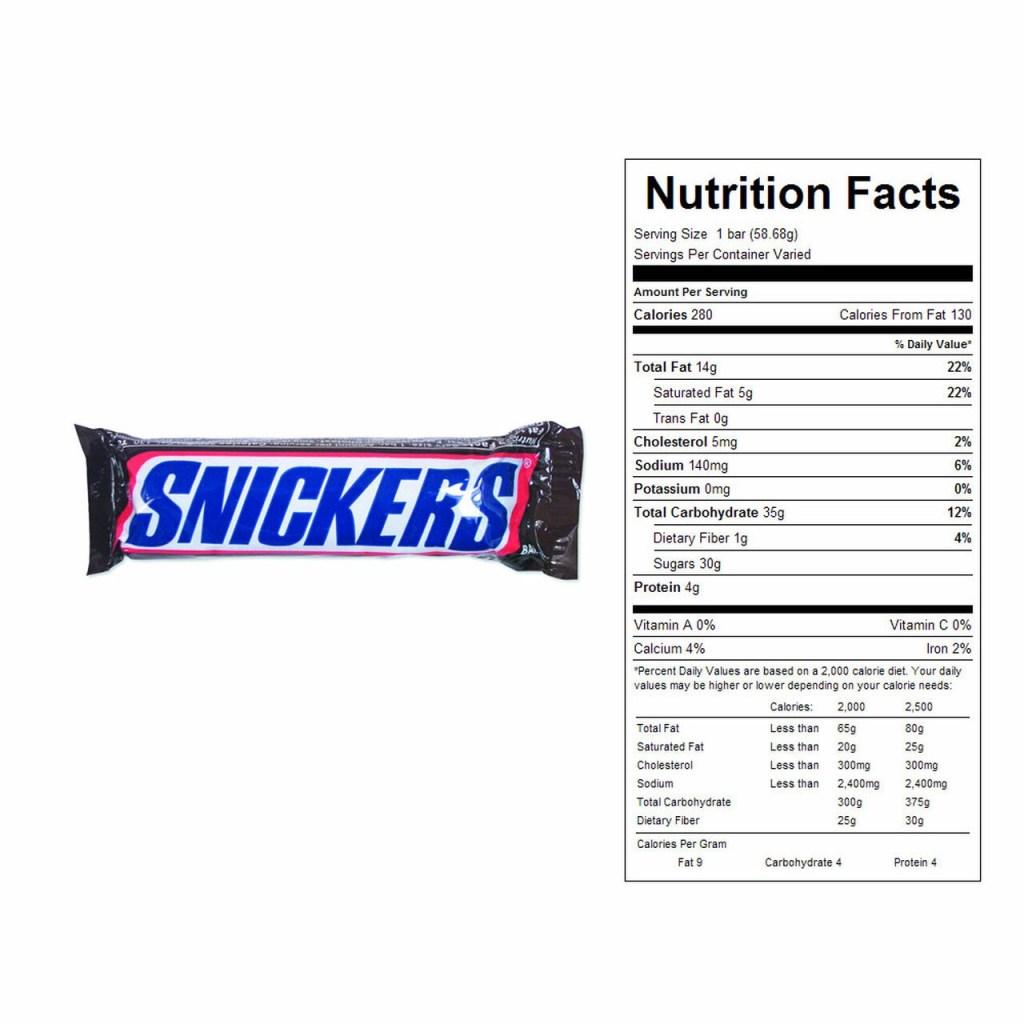
“The average person will burn between 80 to 140 calories per mile. 30 minutes of running will burn between 280 and 520 calories, depending on your weight and speed.”1
So to “burn” the calories from eating a Snickers bar you’d need to run about 3 miles.
Some people try to out-exercise their eating. It’s like people who try an out-earn over spending. Some people think they can do it but in the end it doesn’t work.
Invitation
If you love Snickers like I do (nuts and chocolate, such a delightful combination) rather than adding it to your diet in addition to all the regular meals and snacks, eat less of a meal or skip a snack and have a Snickers once in a while.
Look at those pearly-whites! (Not Dan, different guy.)
My friend Dan is over 80 years old. He used to write script for TV shows; now he writes *books in his spare time when he’s not running a nursing home in Los Angeles. Aside from his pleasant, colorful manner Dan has a beautiful smile including beautifully white teeth.
I asked him how he did it. “Baking soda” came the reply, “I brush with it daily.”
Not long after, my sister Nicole (also possessing a beautiful, white smile) surprised me with the same answer, “I dip my toothbrush with the toothpaste in baking soda”.
As I have adopted this habit (the taste isn’t great but it’s spit out anyway) my mouth feels cleaner. Try it and see for yourself.

 You-Thrive.net